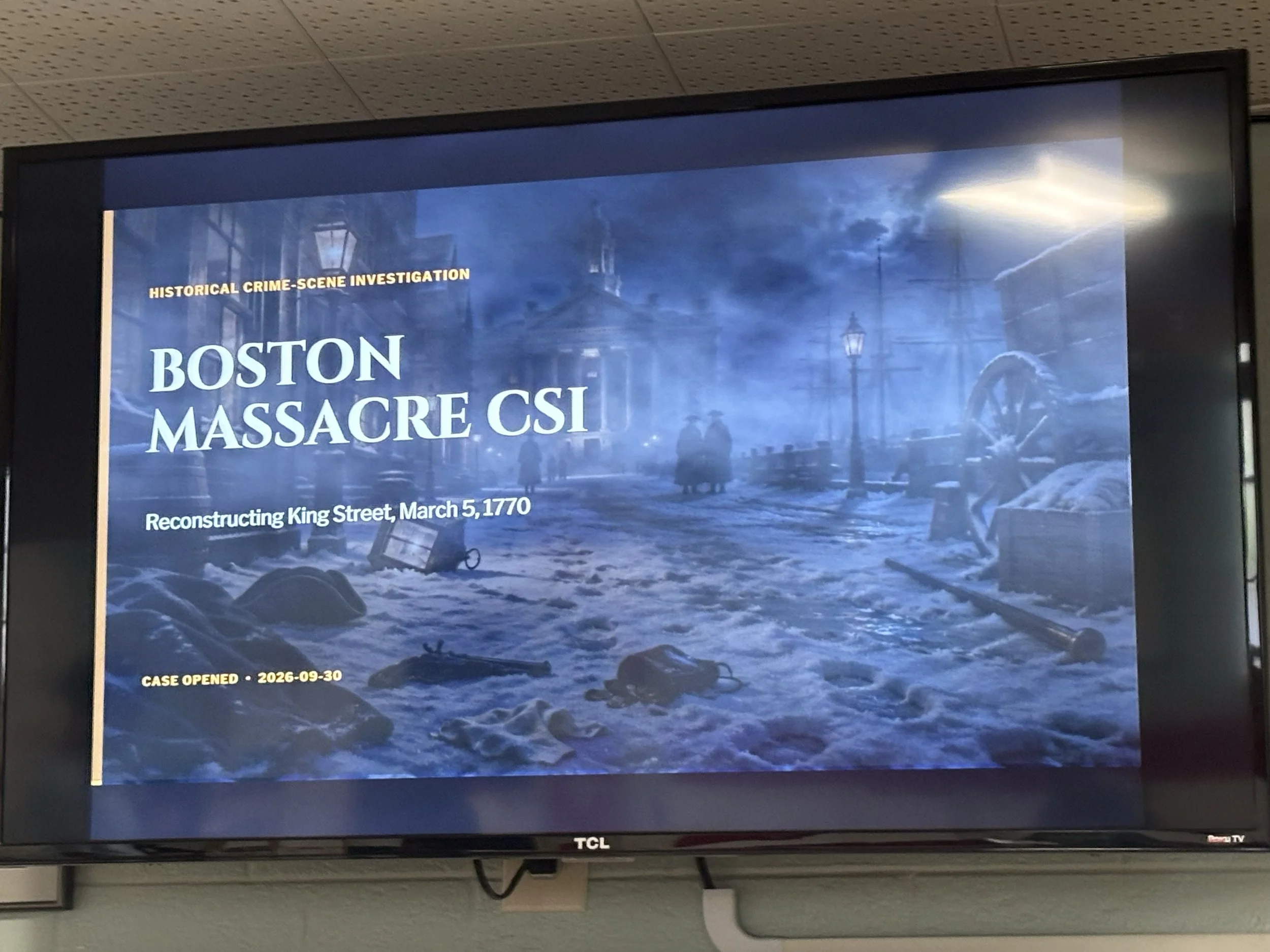
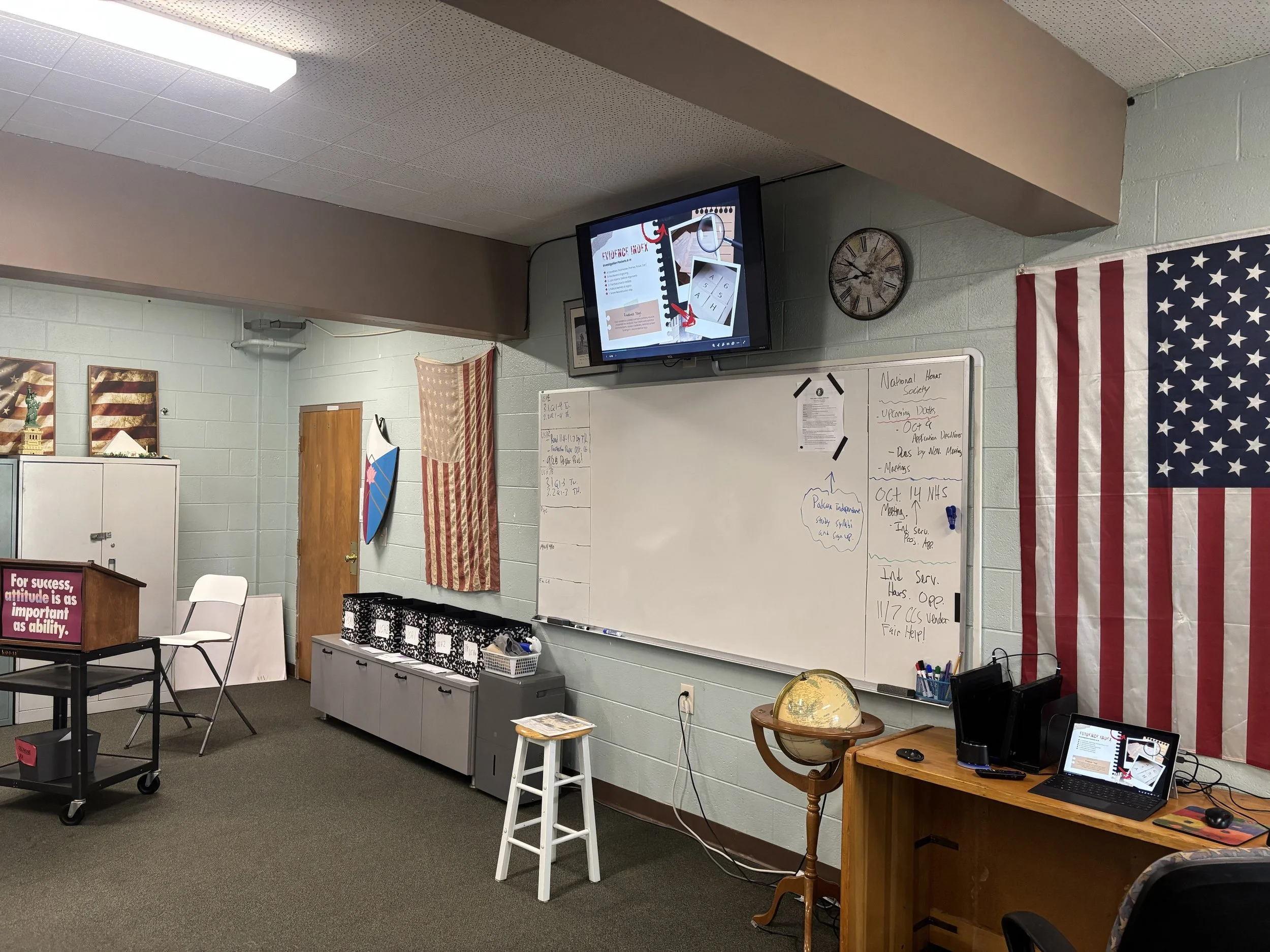
CASE FILE CLOSED: BOSTON MASSACRE CSI IN ACTION!
Students in our 7th/8th Grade U.S. History & Civics and 11th Grade U.S. History & Government classes recently stepped into the shoes of historical crime scene investigators to solve one of early America's greatest historical mysteries: What really happened on King Street on March 5, 1770?
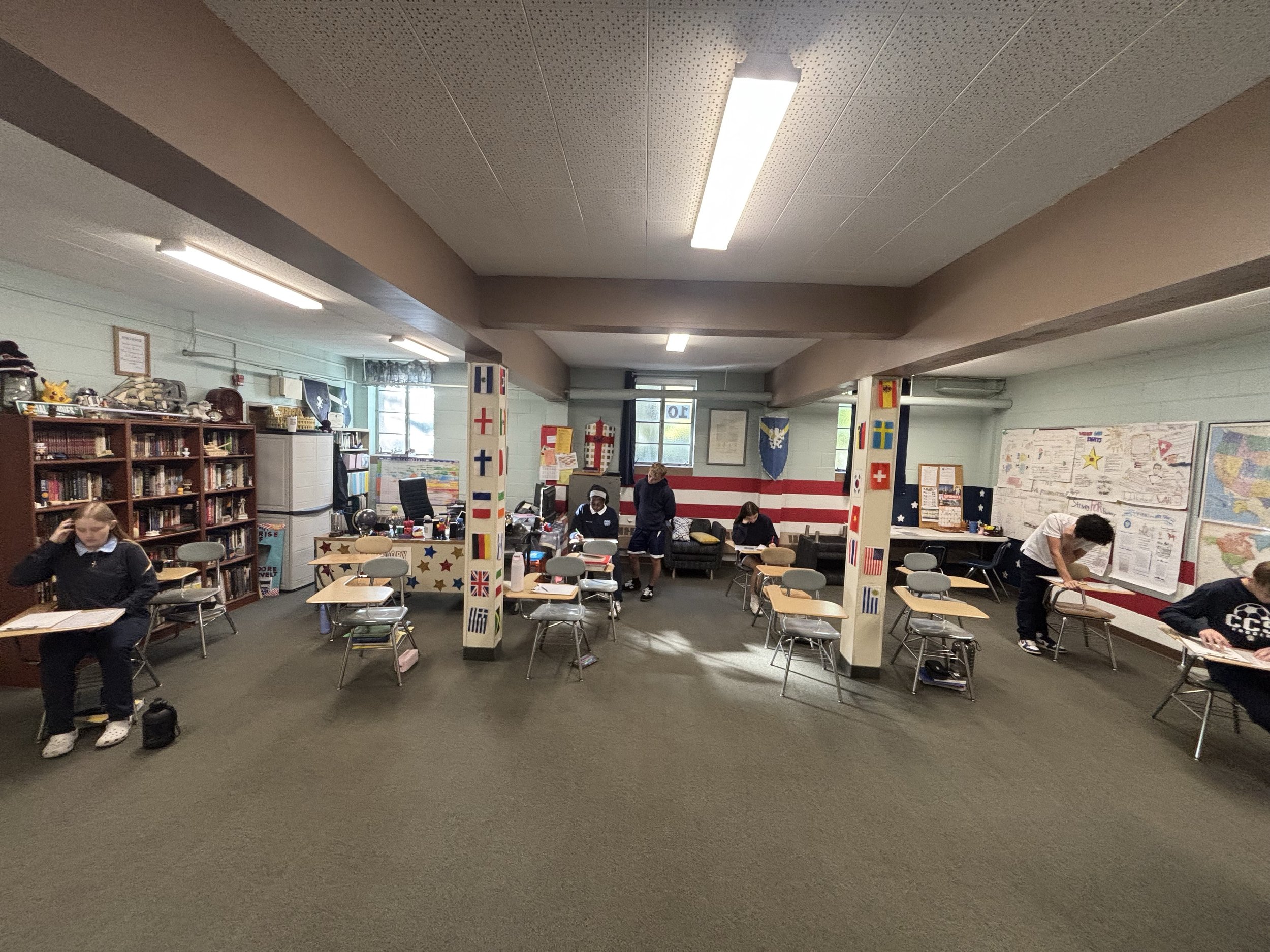
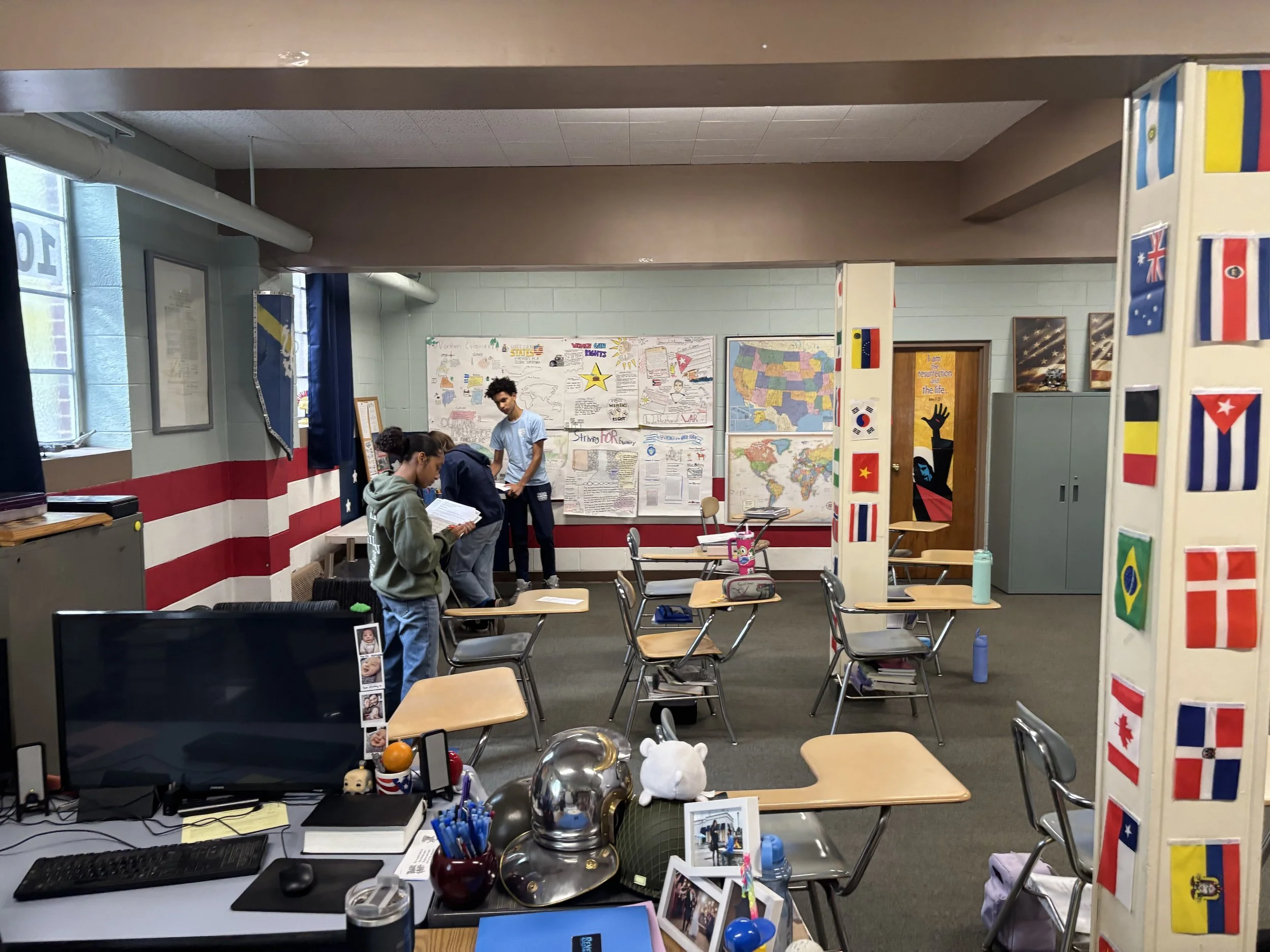
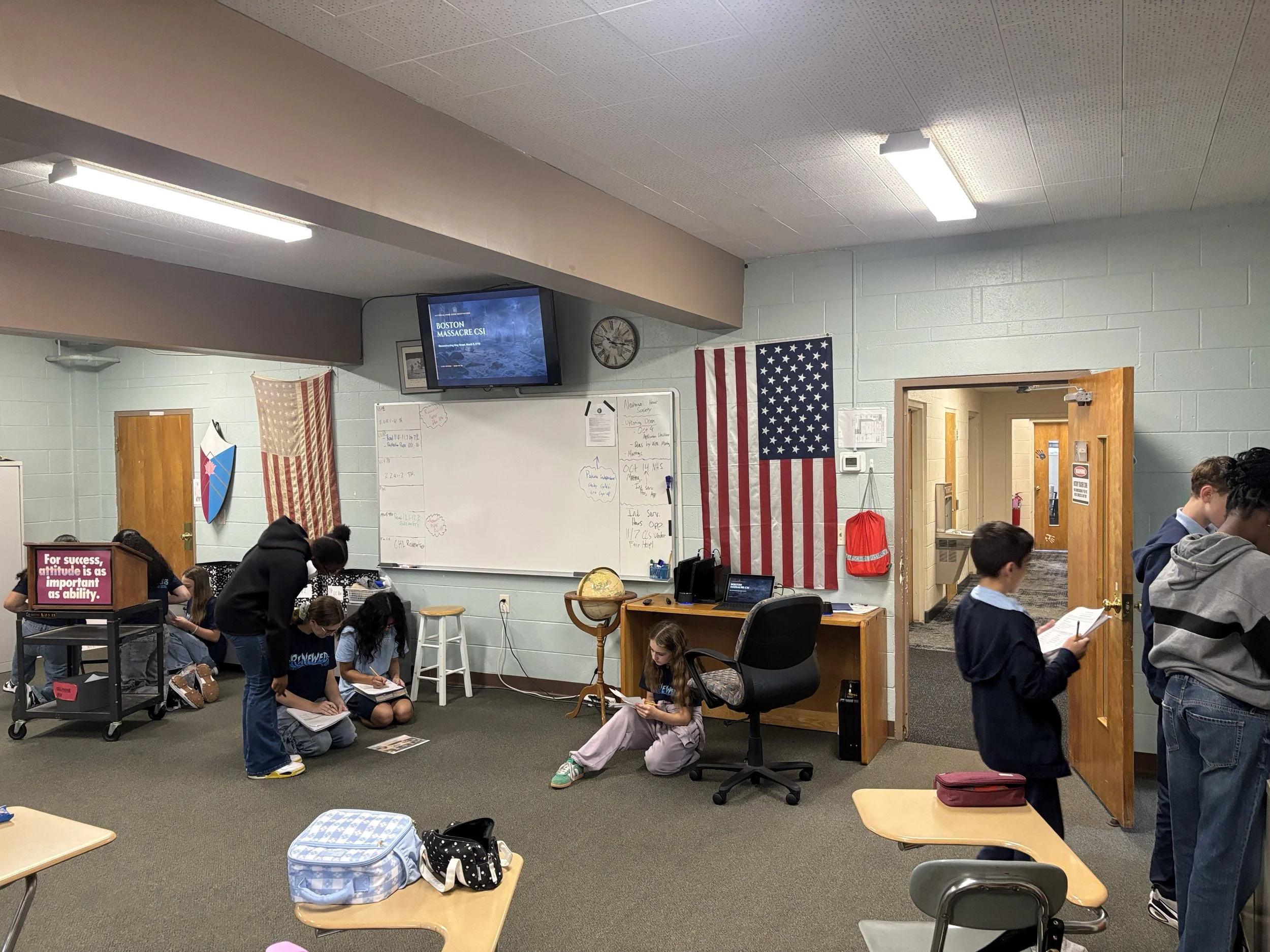
Instead of just reading from a textbook, our young historians spent the lesson reviewing primary sources, mapping evidence, and sifting through conflicting eyewitness accounts to determine what can be proven with confidence—and what remains uncertain.
What Our Student Investigators Accomplished
Reconstructed the Crime Scene: Analyzed spatial maps of King Street to plot positions of British soldiers, colonial crowds, the Royal Custom House, and the Old State House to see how physical location impacted what people saw and heard.
Interrogated Eyewitness Testimony: Weighed conflicting primary accounts from witnesses like Richard Palmes, Newton Prince, and Patrick Carr to evaluate perspective and credibility.
Exposed Propaganda: Evaluated Paul Revere’s famous political engraving to separate visual bias and political spin from historical fact.
Evaluated the Legal Trial: Examined the courtroom defense led by John Adams, assessing the evidence that acquitted Captain Thomas Preston and six soldiers, and exploring how legal verdicts shape historical memory.
Collaborative Investigative Teams (11th Grade Focus)
To tackle this complex case, 11th-grade teams took on specialized forensic and legal roles to construct their final historical reports:
Lead Investigator: Kept the team focused on evidence-based conclusions.
Source Analyst: Evaluated source bias, audience, and historical context.
Scene Reconstruction Specialist: Mapped spatial details and flagged disputed areas on King Street.
Evidence Clerk: Tracked corroboration and conflicting witness statements.
Legal Analyst: Assessed the trial, Adams's defense, and legal outcomes.
Lead Writer: Built the final argument, backing claims with solid historical reasoning and addressing key complications.
Developing Critical Historical Skills
By learning how to separate facts from inferences, corroborate testimony, and acknowledge complications in historical records, our students practiced the essential critical thinking skills that real historians—and informed citizens—use every day.
Great work to all of our student investigators on closing the case with evidence and discipline! 🏛️📜